
My Books:
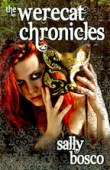
The Werecat Chronicles
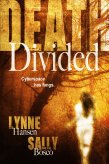
Death Divided
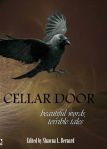
Cellar Door: Words of Beauty, Tales of Terror

Monstrous Feminine: Dark Tales of Dangerous Woman

Hazard Yet Forward
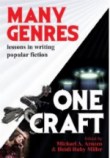
Many Genres: One Craft
Small Bites
Author of Dark Fiction
This blog post will be the first in a series of marketing tips for writers. In promoting my book, Cevin’s Deadly Sin, I wanted to hone in on what works in our digital age for reaching the widest audience. Out with the book signings where you might reach a couple of people. In with trying to get reviewed by an online journal that has the potential to reach thousands of people.
First of all, we’re no longer “marketing,” we’re finding our target audience and providing content that interests those people. It’s the idea of providing value and building a community, rather than hard-selling your book.
Marketing Tip #1: Deconstruct the Marketing Approach of a Similar Novel:
Choose a book that is similar to yours and do a search to see how the publisher marketed the book. First of all, choose a successful, well-known book, then take a look at the following:
These steps seem simple, yet they accomplish a wonderful goal—finding your target audience. I’ve found that by performing these steps, I’m connecting with people who want to read what I’ve written. And I’m building a base of readers for my future books.
Do you have any marketing tips you’d like to share?
Happy Promo-ing!
Sally
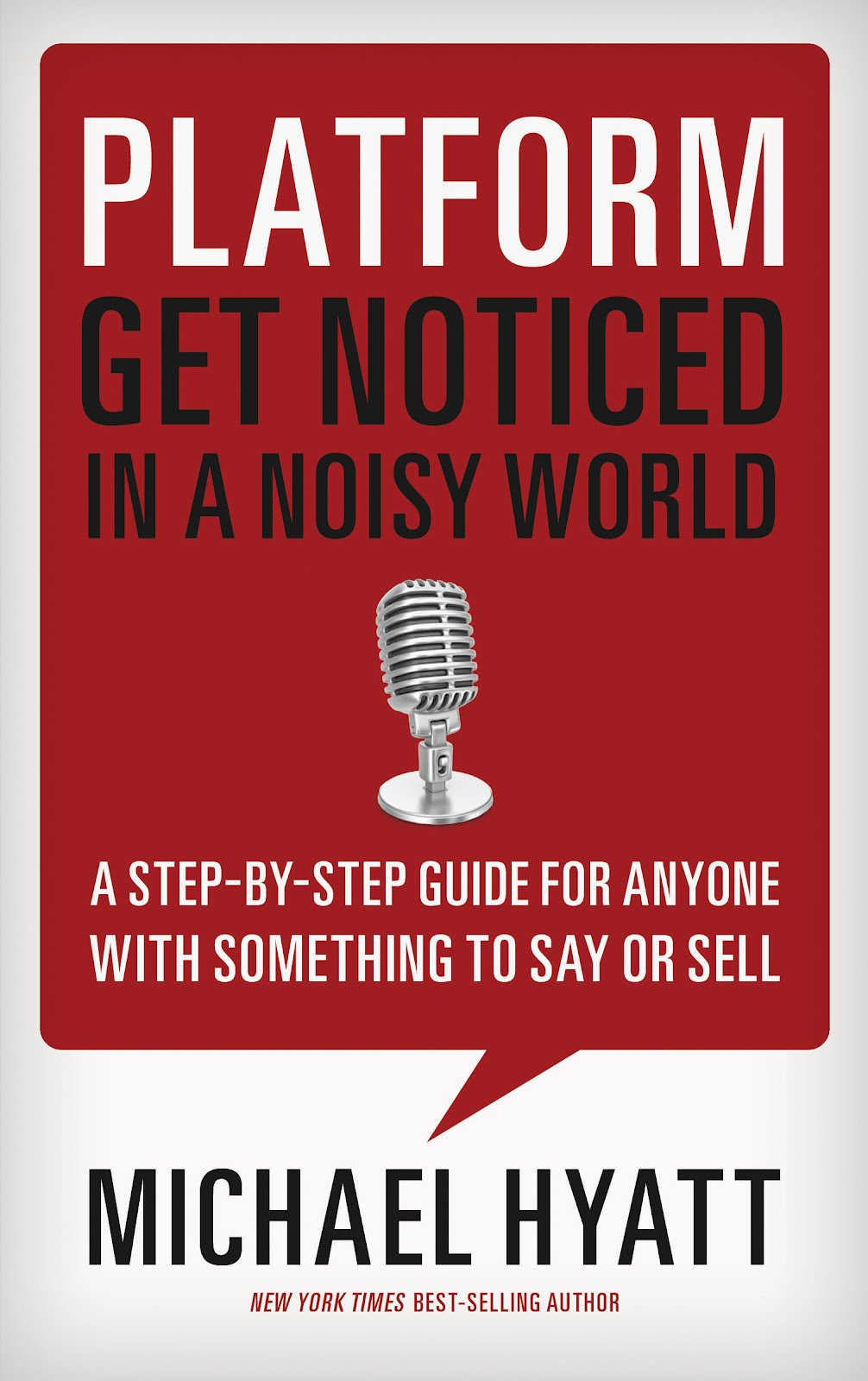 Platform-Get Noticed in a Noisy World, by Michael Hyatt is a really excellent book about developing your platform, and though it’s not specifically geared toward writers, I found that there were a lot of ideas I could use for my writing.
For example, he has an interesting take on writing blog posts. Use a blog post template, with the following elements: Lead paragraph, Relevant image, Personal experience, Main body, and end with a Discussion question in order to encourage responses.
He recommends making video interviews of other authors and post them to your blog. Send the interview ahead of time, and record the interview through Skype.
Post your own videos in which you speak about various aspects of writing or of your books.
Create a public speaking tab on your website:
Hyatt tells us to Kiss Marketing Goodbye. Marketing is dead. Tribe-building is the new marketing. It’s about participating in a dialogue with fellow travelers and building relationships.
Write informative guest posts on other people’s blogs.
Offer to give away a free e-book in exchange for people signing your mailing list.
He emphasizes the importance of using Twitter to build your brand. Some useful tips are:
Become an Amazon Associate and use an affiliate code in links to your own books. This generates extra income every time someone buys one of your books through your link.
Hyatt offered some ideas for novelists, such as:
Hyatt has many more ideas and recommendations that are applicable to writers. This book is a great read for anyone interested in developing and building a platform, and I’d highly recommend it.
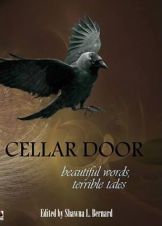
I’m just realizing that I’ve never written a post about the “Cellar Door Anthology” in which one of my stories is published. Edited by Shawna L. Bernard, the book is a compilation of tales of beauty and terror about what may lie beyond the cellar door.
 I have a fascination with weird architecture that started when I read The House of Leaves by Mark Z. Danielewski, and it grew when I read the stories of H.P. Lovecraft.
I wanted to write something involving weird architecture for this anthology. My result was my short story, “What Grows In Between.”
My inspiration for this story came from doing research on the Dupli House, which is located in Marbach, Germany. It was in disrepair and had to be torn down. Here’s a photo of the original house.

The architectural firm of J. Mayer Arquitectos took on the task of building a new modern house in the footprint of the old house. Actually, they came up with a new footprint by duplication and rotation of the out line of the old house:

The result is breathtaking:

I thought, what if the spirit of the old house wanted to come through the framework of the new. That idea gave birth to my story, “What Grows In Between.”
Here’s the synopsis: Emily and Daniel have ditched high-powered jobs for a more low-key life. Though Daniel actually prefers more traditional architecture, Emily falls in love with an ultra-modern house that is situated out in the woods in Massachusetts. They’ve been waiting all their lives for this. He’s going to start painting and she’s going to do freelance architecture from home. That was the plan, but when the house grows an old-style cellar door, they start to realize that it has motives of its own.
The following is an excerpt from a review written by Dr. Robert Curran, psychologist and author of several works on folklore and the paranormal:
“There are some places in my mind where I seldom go. They are rooms of imagination, impression and memory that are often better left undisturbed because they are full of old fears and terrors which still have the power to grip me. They are better off left to moulder behind locked doors. This anthology tells me that I’m not alone in this respect.
“There are too many stories and poems within this anthology to review comprehensively–and I’m not going to try–but each one reflects the horror of some dark world, lying around the foot of the descending cellar steps or up in that shuttered attic. And they are brilliantly illustrated in paintings and drawings which are evocative of each tale.
“This is definitely a book for the winter, when the nights are dark and the wind makes strange houses through the house. It is a book to be savoured and shuddered at. It will take you to places in your mind where you really shouldn’t go.”
This post by Patrick Keller about a Halloween party in 1911 caught my imagination. It’s a fun read about celebrating my favorite holiday in a bygone era. I can picture myself there somehow. I have an urge to spin it off into a horror story.
As many of you are no doubt planning themes for Halloween get-togethers next month, I thought maybe Ms. Ruby Ross Goodnow could help you plan. Actually, the party below, held on “Hallowe’en” at “eight o’ clock” in 1911, was also meant to be a housewarming party, for a brand new home, perhaps a bungalow or craftsman like the one pictured below. I found this article, originally published in the October 1911 issue of The Delineator, a few years ago and I just love it! (Note that a yearly subscription was $1. Sweet!) I’m considering planning a Halloween get together myself, and using this retro article as a starting point for a turn of the century theme!
From the October 1911 issue of The Delineator:
___________________________________
Mrs. Goodnow will be glad to help you with any kind of entertainment. Write…
View original post 517 more words
What makes a best selling novel? James W. Hall, a creative-writing professor and crime novelist, did a study of “megabestsellers,” and found that they all share 12 common elements — to such a degree, in fact, that they are all “permutations of one book, written again and again for each new generation of readers.” You’ll find some of the elements surprising.
1. An Offer You Can’t Refuse:
2. Hot buttons:
3. The Big picture (Scope):
4. The Golden Country:
5. Nothing But the Facts Ma’am:
6. Secret Societies:
7. Bumpkin Versus Slickers:
8. God is Great, or is He?
9. American Dream/American Nightmare:
10. A Dozen Mavericks:
11. Fractured families:
12. The Juicy Parts:
It isn’t really that we’re going to try to fit all of these elements into the novels we’re writing, but it is interesting to think about, and I did get some inspiration for my work in progress by reading James W. Hall’s book, Hit Lit: Cracking the Code of the Twentieth Century’s Biggest Bestsellers.
I’m pleased to reveal the cover of a new book, Greenshift, by science fiction author, Heidi Ruby Miller.
Heidi uses research for her stories as an excuse to roam the globe. Her novels include GREENSHIFT, AMBASADORA, and the upcoming ATOMIC ZION. She also co-edited the writing guide MANY GENRES, ONE CRAFT. In between trips, Heidi teaches creative writing at Seton Hill University, where she graduated from their renowned Writing Popular Fiction Graduate Program the same month she appeared on Who Wants To Be A Millionaire. She is currently an editor at Dog Star Books. You can read about her at http://heidirubymiller.blogspot.com and tweet her @heidirubymiller.
To celebrate the cover reveal for Greenshift, the e-book will be temporarily 99 cents at Amazon!

A tale set within the world of Ambasadora.
Mari’s rare eye color makes her a pariah within Upper Caste society, which is why she prefers plants to people…except David, the former Armadan captain who shuttles scientists around on a refurbished pleasure cruiser.
But someone else is interested in Mari and her distinctive look–an obsessed psychopath who tortures and murders women for pleasure.
When the killer chooses Mari as his next victim, the soldier inside David comes alive, but it is Mari who must fight for her own life and prove she isn’t as fragile as the flowers she nurtures.
Greenshift by Heidi Ruby Miller
Cover Art by Bradley Sharp
Foreword by Dana Marton
Space Opera/Science Fiction Romance paperback coming from Dog Star Books in August 2013

I’m pleased to take part in the cover reveal for my friend and Seton Hill classmate, Jason Jack Miller’s new book, The Revelations of Preston Black! See links to reading samples below.
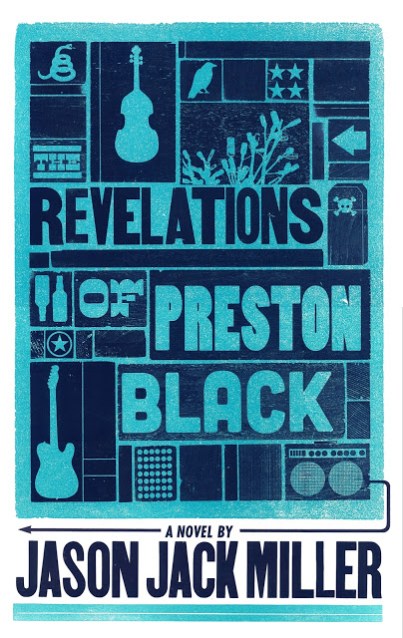
THE REVELATIONS OF PRESTON BLACK BY JASON JACK MILLER
Coming June 2013 from Raw Dog Screaming Press
Cover Art by Brad Vetter
Preston and Katy face a new darkness….
Sometimes a battle between good and evil doesn’t look much like the ones they show in movies. The good guys don’t always wear white, and they don’t always walk away with the win.
And sometimes you’re better off with the devil you know.
The last time Preston went down to the crossroads, his best friend died and he nearly lost his brother. But Old Scratch doesn’t take kindly to fools, especially not those who come knocking at his front door. And before all is said and done, he’s going to teach Preston a thing or two about what it really means to sacrifice.
LINKS:
Read the first 100 pages of The Revelations of Preston Black – http://jasonjackmiller.blogspot.com/p/the-revelations-of-preston-black.html
Pre-order The Revelations of Preston Black at Raw Dog Screaming Press – http://www.rawdogscreaming.com/books/the-revelations-of-preston-black.html

I’m very happy to post this guest blog from the fabulous Lee Allen Howard!
 Very few fiction writers earn enough from their creative efforts to support themselves. I don’t—yet. So we have day jobs (or night jobs). Anthony Trollope, one of the most prolific English novelists of the Victorian era worked as a clerk at the General Post Office. Stephen King once labored in an industrial laundry and later taught school while he wrote.
I’ve got a day job, too. Since 1985 I’ve been a technical writer, primarily for the software industry. Although I’ve made a good living at it, writing user manuals and help systems ain’t the most exciting work, let me tell you. But my day job has:
On the other hand, all this time working has kept me from pursuing my love of fiction writing full time. Sometimes, after 10 hours of slaving over complicated technical material, I’m brain-fried and have little left to devote to creative pursuits.
But I appreciate the value of my day job (as well as the benefits it provides, like healthcare). And I’ve used it in my writing. In The Sixth Seed, protagonist and family man Tom Furst is a technical writer for a software company.
My technical writing abilities came in handy when researching and writing DEATH PERCEPTION, my latest supernatural thriller tinged with horror and peppered with dark humor. It’s about a young man who runs the crematory at the local funeral home and who discovers he has a gift for discerning the cause of death of those he cremates—by toasting marshmallows over their ashes.
I actually spent an afternoon at a crematorium learning the process. I took copious notes, drew diagrams, and made charts. These notes were invaluable in writing the technical material related to cremation.
If you’re a writer, don’t curse your day job. Use it to fuel your desire to write fiction. And, whatever kind of work you do, you can leverage it to lend realism to your stories. I did.
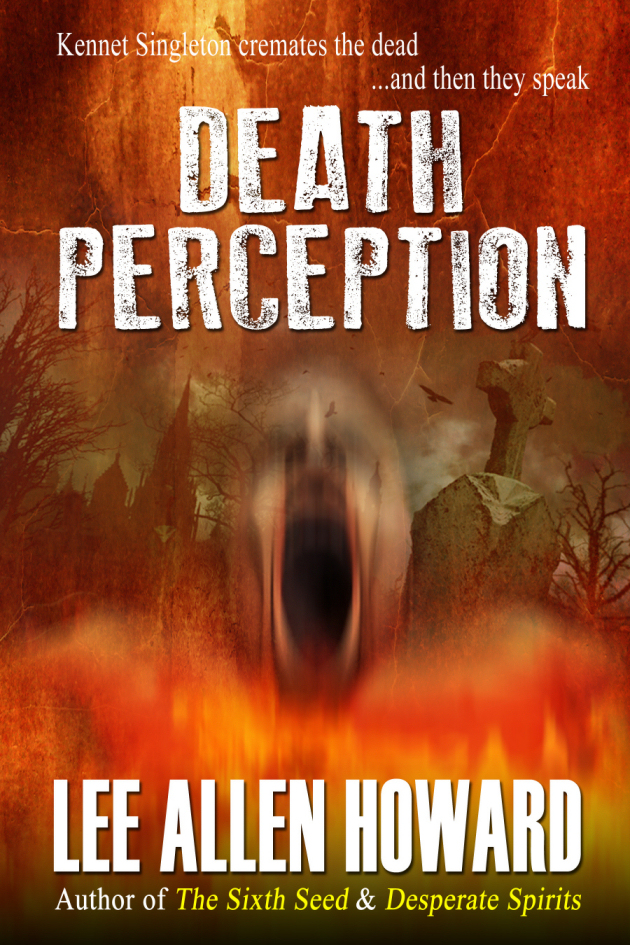 DEATH PERCEPTION is available in trade paperback, Kindle (.mobi) and Nook (.epub) at http://leeallenhoward.com/death-perception/.
BIO
Lee Allen Howard writes horror, dark fantasy, and supernatural crime. He’s been a professional writer and editor of both fiction and nonfiction since 1985. His publications include The Sixth Seed, Desperate Spirits, Night Monsters, “Mama Said,” “Stray,” and DEATH PERCEPTION, available in various formats at http://leeallenhoward.com.
You can keep in touch with Lee on his Facebook author page: http://www.facebook.com/pages/Lee-Allen-Howard-author/117844011639457. Follow him on Twitter @LeeAllenHoward.
 This is a short story I wrote that I think could be the beginning of a novel. I have a plot in mind. I think this one is going to have to simmer before I write it. Here it is:
Immersion
The girl jolts like she’s been dropped into this body from thirty thousand feet. Her eyes flutter and her heart hammers on an arrhythmic beat. The breath catches then rushes in too fast causing a choking fit. Where is she? What’s she doing here? Who is she?
Lying prone she’s almost afraid to open her eyes. She curls one hand flexing its fingers. The skin feels dry and cold. Alien. She digs her fingernails into the palm and feels a sharp pressure.
The rushing pulse of this body feels dangerous. Dangerous like it might explode.
Deep breaths. Get the systems under control.
Her eyelids drift open and she sees a light fixture, nothing more than a bare bulb overhead.
She’s aware of a scratchy blanket beneath her.
Looking down she sees that the body is wearing a thin tee shirt and shorts.
When she explores the body with her hands, she feels railroad track ribs poking through paper skin. When she sits up in bed dizziness overtakes her, and she lies back down panting.
She rests.
One more try, and her feet are on the floor, and her hands are clutching the edges of the thin mattress.
She stands, nearly falls over and catches the nightstand.
She makes her way to the bathroom afraid of what she might see in the mirror.
To soften the blow she explores her face with her hand, feels taught skin, slightly oily.
The bathroom is dark. All the better to allow her to see her form gradually.
The mirror shows her the outline of a small thin girl with long hair.
She closes her eyes and flips on the light switch.
Her heartbeat again feeling dangerously fast she opens her eyes a crack. The light is blinding so she closes them again. Screws up her courage and opens them again. Just a crack at first, then wider.
Her heart is beating uncontrollably now and she can hardly catch her breath.
When she opens her eyes fully, she doesn’t recognize the face, not an inkling, not an ounce. It’s long thin nose and solemn lips are unrecognizable to her.
She gets up the nerve to look in the eyes. They are brown and unremarkable.
But when she looks into them something catches. Something snaps into place.
And she remembers why she’s there.
The Werecat Chronicles
Death Divided
Cellar Door: Words of Beauty, Tales of Terror
Monstrous Feminine: Dark Tales of Dangerous Woman
Hazard Yet Forward
Many Genres: One Craft
Small Bites
 Sally Bosco’s RSS feed
 Sally Bosco
Happy Valentine’s Day, Johnny Weir!
According to a recent Huffington Post article, Johnny’s inspiration for his Olympic fashions is Stanley Tucci’s flamboyant character from The Hunger Games. (In fact, some say that Tucci trumped Jennifer Lawrence in the famous dystopian epic.)
Johnny has been posting his fabulous outfits on his Instagram account all week. I’ve posted a few here. Also below is a video of his flawless short skating program from the 2010 Olympics in Vancouver.
Since Cevin’s Deadly Sin has been published, I’ve been noticing articles about trans and gender questioning people everywhere–from Facebook adding a new “trans” category to their gender classification choices to trans models being in major fashion shows. The world is gradually opening up to accept people in all of their varieties. There are still some who disapprove, but, to quote Victor Hugo, “All the forces in the world are not so powerful as an idea whose time has come.” The time has come for inclusion of all shades of gender.
Yes, Johnny Weir is a true American hero, standing up for what he believes in and furthering the cause of gay and gender queer people everywhere.
Today’s look. Thank you @ericksonbeamon, RAI LA, @RICKOWENSONLINE, and @BPCM. by @johnnygweir
Today’s Look: Blazer Vintage @Chanel, Jewels @joomilim, Leathers @GPugh_Studio, Wedges @RICKOWENSONLINE by @johnnygweir
Today’s look and two flames: Billy Reid NYC jacket, @joomilim necklace, RAI LA leather leggings and @RICKOWENSONLINE wedges. by @johnnygweir
This is Johnny’s short figure skating program from the 2010 Vancouver Olympics. (tweeted by Johnny himself yesterday) It’s a great example of artistry, talent and hard work combining to transcend the the physical medium and lift the performance into the realm of the divine.
Share this: