My Books:
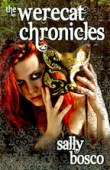
The Werecat Chronicles
Death Divided
Cellar Door: Words of Beauty, Tales of Terror

Monstrous Feminine: Dark Tales of Dangerous Woman

Hazard Yet Forward
Many Genres: One Craft
Small Bites
Author of Dark Fiction
Romance that weaves a spell and makes you think.
 When Leigh Cameron goes back to her hometown of Watford Maine to attend her father’s funeral, she doesn’t expect to inherit his small-town newspaper. She also doesn’t expect to fall for her father’s protégé, the hot and handsome, David Stone. David resents her being there, and she really wants to sell the paper and go back to her Arts and Entertainment job at a big paper in New York. But as she gets more and more enmeshed in life in the small town, she begins to think she might want to stay.
I can’t say enough good about this book. Meline Nadeau weaves a spell around the reader that starts at page one and doesn’t quit until the end. It has everything a romance should have without the irritating things a lot of romances do have.

Meline Nadeau
The characters are well-drawn and multi-dimensional to the point that we truly care about them. Leigh is a high-spirited, kick ass heroine who’s witty and can hold her own in any conversation. David is strong and determined with a sensitive side. His background as a poor, native American, son of a prisoner makes us admire and like him for of the rough beginnings he was able to overcome. Minor characters that could have easily become stereotyped, such as the mean stepmother and gay best friend, come to life as individuals.
Nadeau builds the tension between Leigh and David so masterfully that by the time the sex scenes happen we’re really ready for them. The romance and chemistry between the characters is tense and engaging, and their erotic encounters are that much hotter for the emotional relationship between them.
The plot is well-constructed and believable. Events that happen at the end were foreshadowed in the beginning, leading to a satisfying resolution. There was suspense, not only in the relationship between the characters, but in the interesting and tense sub-plot of the Native American uprising at the local prison.
In some romances, the devices that keep the male and female protagonists apart can seem silly and contrived, but in Stop the Presses, the reasons seem real and natural, not forced.
Meline Nadeau draws a locale so picturesque and warmhearted it makes me want to visit Watford, Maine. The descriptions of the settings are so vivid, the town becomes a character in the book.
Her style is easy and natural, her words rhythmic, her dialogue witty and smart. She’s able to evoke genuine emotion through her writing.
For a fun, feel-good read, there’s nothing better. I can’t wait to read more of her books.
Here’s today’s story.
Amish Goth:
‘So, this Amish girl walks into a Goth bar.’ It sounded like the setup for a bad joke, she thought.
Sarah was on Rumspringa, the one time in an Amish person’s life they could go out and explore the world, do what they pleased. She’d always had a fascination with the Goth subculture, so she bought some daring clothes: a leather mini-skirt, fishnet stockings and boots. She ripped up a black tee shirt and pieced it back together again with safety pins. Perfect.
She’d left her house wearing her prim bonnet, apron and calf-length dress, but when she was far away from her parents’ house, she’d pulled the magical clothes out of their hiding place and dressed, releasing her long blonde hair from its bun and letting it fall around her shoulders. She so wished she could dye it black. A touch of the makeup she’d bought at the CVS and she was ready.
Now she could barely recognize herself in the mirror.
At first, the din of the bar made her ears throb, but she quickly got used to it. The sight of vampires, dominatrix, and assorted creatures of the night scared her initially, but she knew they were only play-acting at being Gothic, just like she was.
She sat down at the bar, trying to get her bearings and ordered a Coke. Soon a man sat down next to her. She didn’t even know how to act or what to say.
“Come here often?” the young man asked. He had a pleasant yet pale face with dark hair, cut shorter at the back and longer in the front. Wearing a hint of eyeliner and lipstick he was quite attractive, actually.
“No,” She blushed at his attention. “This is my first time here.”
“Mine, too.”
“Really?”
“Yeah. You’re going to laugh at this, but where I come from, they’d really disapprove of this whole thing. They’d say it was sinful. But I was curious. I came a long way to see this place.”
“Where did you come from?”
“Lancaster, Pennsylvania.” He extended his hand. “I’m Jacob. Pleased to meet you.”
Many of the participants of this challenge are affiliated with the MFA program in Writing Popular Fiction at Seton Hill University.
Here’s today’s story. It’s a really short one.
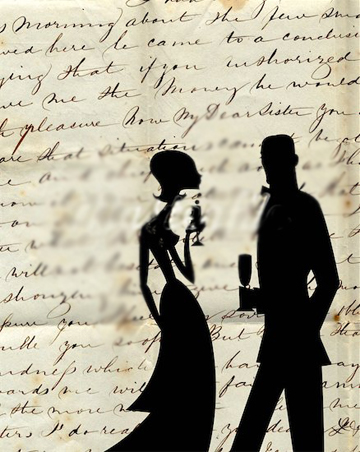
Recognition:
The curve of her neck. The tilt of her head. The enticing way she played with her martini. He instantly knew she was the woman he’d want to divorce in six years.
Many of the participants of this challenge are affiliated with the MFA program in Writing Popular Fiction at Seton Hill University.
Here’s my entry for today:
Revenge
I woke up in darkness barely able to breathe. When I tried to move my arms and legs, I found that I could, but in a limited way. Something smooth and crinkly confined my limbs. I struggled and kicked against the barrier that enveloped me. Surely I’d suffocate in short time if someone didn’t rescue me. It must have been the work of a mad serial killer. I yelled out, “Somebody help me. Please.” My voice echoed within my confined space. I kicked and punched at the material, struggling to break free.
A man’s voice called to me. “Save your energy. I’ve been trying to bust through this thing for days and it’s no good. Nothing works. It’s indestructible.” The voice sounded middle-aged and tired.
I looked around and saw the outline of a man lying beside me in the same bound condition as myself. It was so dark in the closed room I hadn’t even known he was there. “Hey!” I called. “Who are you? What’s going on?”
Though I could barely make him out in the darkness, I watched his head turn. “I’m Ben and I have no idea,” he said in a voice muffled by the material.
“What kind of maniac would bind people up like this and put them in a dark room? It’s a small room too, like a casket.” I shivered
“I don’t know. I’m hoping for the best. Hoping that it’s not some crazed killer who’s going to torture us. Maybe it’s like aliens or something, who will do their tests and wipe out our memories and put us back where we were. What’s your name?”
“I’m Carmella.”
“Pleased to meet you, Carmella. I wish I could shake your hand.”
“Me, too. What do you do?” I rolled onto my side within the confines of my sack so I could see him better.
“I run a used bookstore, collectibles, that sort of thing. How about you?”
“I’m a housewife, basically. Nothing exciting there. I do sell a few things on ebay to make some extra money.”
“Interesting. I’m a big ebay seller myself. For a while there ebay was like a gold mine. Now, not so much. What with the bad economy and the fact that they take more of a cut.”
“I’m telling ya, it’s hard to make an honest living on there anymore.” I paused and tried to wriggle closer to him. “Ben, what do you suppose will happen to us?”
“I wish I knew. Look!” He pointed to a glowing spot at one of the top corners of the room.
“What’s happening?” The entire ceiling lifted off, and the light nearly blinded me. So much so that I could barely discern the outline of a huge person.
Ben shrieked. “No, it’s not!”
A giant hand grabbed for me. It wrapped around my midsection, crushing my ribs. I’d never survive this attack.
Holding me over a vast drop, the thing stood me upright and opened the top of my prison. It had huge round eyes and a furry nose.
It was only when it lifted its arm that I saw the paper heart hanging down.
Ty, the tag said. Beanie Baby.
Many of the participants of this challenge are affiliated with the MFA program in Writing Popular Fiction at Seton Hill University.
Here’s my entry for today:
 The Good Teacher
I slip the cover off the body, make my initial cut beneath the right ear and wait for the first student to faint. Not to disappoint me, a strapping, six-foot-tall guy staggers then face-plants onto the cement floor. I’ve been teaching this “Forensics for Writers” class at NYU for five years now, and I’ve never seen a bigger bunch of wusses.
“I showed you this cut during the last class, but we’re going to go over it again, because mostly everyone keeled over the last time.”
The women usually fare better than the men. That’s why I’m not surprised when a thirty-something soccer mom comes right up to the front of the table and looks on, spellbound. “I had an experience with a cut up body.” The way she examines my face gives me the creeps.
“We only have time for questions, not personal stories.”
“See, there’s this lady who lives…lived…next door to me and I heard a funny noise coming from the cellar. Like somebody screaming, but muffled. After I heard the noise, I went over to the half-window of their basement and looked in.
I put down the scalpel and hold onto the table to steady myself. “You saw…”
“You know what I saw? Her throat was slit ear-to-ear with the exact same cut you’re making right now–the Superficial Fascia from one side of the Platysma to the other.”
The sweat pours down my neck now into the collar of my shirt. I’m remotely aware that the rest of the class is watching, frozen, bug-eyed with mouths gaping.
“The killer made the cut exactly the same way you do.”
All of my blood drains down into my shoes. This is the exact description of the case of the Aquarius Killer. It’s a detail that hasn’t been let out to the general public, which worries me. “You saw this?”
Her eyes widen. “I saw you, holding that same scalpel right over the victim’s body just like you’re doing now. Left-handed.”
I am left-handed. “No. You didn’t see me.”
“I can describe the shirt you were wearing—a black button-down with long sleeves.” Her eyes narrow into a squint. “With a green surgical mask and latex gloves. And those same cufflinks you’re wearing now—silver dragons.” I notice that she’s talking into her blouse.
“No, it wasn’t me. I…”
The door to the lab explodes open and a team of guys in suits pour in. One of them flips open his wallet and I see the shiny indistinct blur of a badge. “NYPD. You have the right to remain silent…”
“What’s this all about? I’m on the forensic team for the Aquarius Murders. I have no reason to want to kill anyone.”
The woman leans in to whisper to me so no one else can hear. “But I do, and I learned how to make that cut from you.”
“Wait!” I yell as they cart me away.
Many of the participants of this challenge are affiliated with the MFA program in Writing Popular Fiction at Seton Hill University.
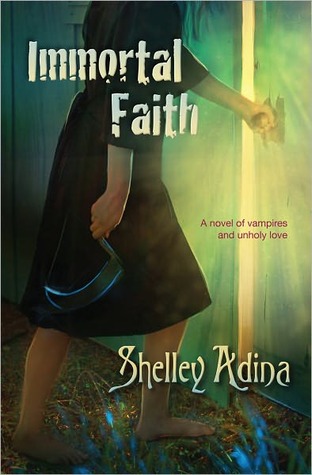 This is a book review of Immortal Faith: A young adult novel of vampires and unholy love by Shelley Adina
Sixteen-year-old Sophie Dupont lives in Minuit, Idaho in a Huguenot community. She follows all of the conventions expected of her until she meets a handsome eighteen-year-old boy who has been working in the community and was recently baptized into the faith.
Sophie falls head-over-heels for the dashing and exotic Gabriel. So have all of the girls who generally only have their own home-grown stock from which to choose. But the difference is that Gabriel loves Sophie back. They get to know each other through delicious and illicit midnight rendezvous. Her mysterious beau does everything within his power to protect her. But as a result complications pile up. I won’t go into any more detail in order to not spoil the plot, but Shelley Adina deals with some difficult and topical issues within the course of this novel.
I thoroughly enjoyed this book. The characters were engaging. Even though Sophie has been brought up to be obedient, she proves that she is plenty capable of thinking for herself and standing up to any conflict that might arise.
Sophie possesses a refreshing honesty. In fact, she remains honest even when it’s against her best interest to do so, so strong are her religious convictions. Yet, the religious aspect of the book is never heavy handed.
Though the subject matter seems incongruous, when you think about it, a Huguenot community would be the perfect place for a vampire to hide. This book took those reasons to their logical conclusions.
Shelley Adina is a skillful writer who knows how to develop suspense in order to hold an audience’s attention. I always find it interesting to read about traditional American cultures, and I love paranormal tales, so this was a perfect read for me. I’d highly recommend Immortal Faith as an entertaining, fast-paced read.
Read Adina Senft fascinating blog, the City Girl’s Guide to Plain Living
Also take a look at Shelley Adina’s steampunk novels.
 In my continuing quest to find out how authors binge write, I interviewed Meg Mims who is a writer of Western Historical Suspense, Historical Mystery and Contemporary Romance. She’s also a fellow graduate of the MFA program for Writing Popular Fiction at Seton Hill University. I’ll be teaching a workshop in Binge Writing at Seton Hill’s In Your Write Mind workshop which will take place June 21-24, 2012 in Greensburg, PA. Here’s my interview with Meg:
Why does having an intensive writing period work for you? How did you become a binge writer?
Last year, right after Christmas, I realized I *should* have written a novella due to the success of my fellow authors’ novellas for that season. Like, WOW! So on December 27th, I decided to shoot for the January 5th deadline of a Valentine’s Day contemporary romance novella. I had an idea, ran with it without plotting a thing. I’m a TOTAL plotter, so this was a big change for me. I had various “points” in my head, but The Key to Love ended up as the closest thing to being a “total pantsed” novella. By the 5th of January, I had 18K words and took another 3 days to add a bit more in the saggy middle.
What do you do, writing-wise-to prepare for your binge writing sessions? Do you have an already prepared outline?
If I ever do this again, I sure would have a prepared outline! Normally I set goals per day or the week and stick to my To-Do list, such as characterizations, or plotting, or research, or my non-fiction writing. I’m not usually a binge-writer. I like taking my time.
What other things do you do to prepare? Stock up on food, unplug from Internet, get into a special mind-set, etc.
You definitely have to either cook ahead or plan on sending hubby/wife for pizza, Subway, Arby’s, Panera’s or Lean Cuisine in the freezer. Avoid FB, Twitter, blogging – only check email once a day. Eat, write, think, visit bathroom, sleep. That’s IT. Seriously.
Do you go away or do you write at home?
I totally have the Sheldon spot on my sofa. It keeps me focused, I can see out the front window and I keep the TV off. I also listen to music soundtracks to speed up my writing. I’ve never tried to go away, and I might not be comfy enough to produce.
How do these sessions make you feel? Exhilarated? Tired? Satisfied? Frustrated?
Once I reached 15K words for the novella, I was very happy. I knew I’d make the deadline or close to it. I was exhausted, though. Frustration set in once I went into edits – I was totally rewriting it far more than my content and line editors wanted. I edited up until a few days before the release! Call me a Perfectionist. I wanted to put my name on a better product.
Do you complete a draft of an entire novel during this period?
The novella was finished, yes. And I’ve done this before for rough first drafts. I don’t like it, though. I prefer taking my time.
What’s your process for editing your draft?
Although I “vomited up” the novella, I usually work an “ocean wave” method — going back and surging forward, so I end up with a decent “second draft” instead of a rough first draft. Then I keep revising for various things – subtext, theme, characterization, depth, etc.
Anything else you’d like to say about binge writing?
I’m planning on doing it again for the Christmas novella later this year. September or October. That’s all I’m giving myself for first draft and the editing before submitting.
Thanks, Meg! I’m looking forward to reading your novella!
Meg Mims is an award-winning author and artist. She loves writing blended genres – like historical, western, adventure, romance, suspense and mystery. Her first book, Double Crossing, won the 2012 WWA Spur Award for Best First Novel.
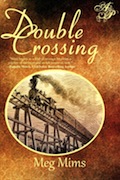 Double Crossing is currently available from Astraea Press, Amazonand Barnes & Noble in ebook and print. Meg also wrote a contemporary romance novella, The Key to Love, published in February 2012.
Meg is a staff writer for Lake Effect Living, a West Coast of Michigan tourist on-line magazine, and for RE/MAX Platinum of Brighton, Michigan. She earned an M.A. from Seton Hill University’s Writing Popular Fiction program in January 2010.
 Follow her on Twitter, visit her on Facebook or check her Website at http://www.megmims.com/
In preparation for teaching a workshop on binge writing at the Seton Hill University “In Your Write Mind” writing conference June 21-24, 2012, I decided to interview several authors who have had binge writing experience.
 Today’s interview is with Leslie Davis Guccione, author of The Chick Palace. She was also my mentor while I was going through Seton Hill University’s Writing Popular Fiction MFA program. She was an inspiring mentor and believe me, I will never use “floating body parts” or use “like” instead of “as” again.
What do you write?
Women’s fiction but this question applies to my years writing series romances for harlequin/silhouette and mid-grade and YA mostly for Scholastic.
Why does having an intensive writing period work for you? How did you become a binge writer?
Juggling fiction with reality (3 kids and 2 house restorations). One foot always on the starting line.
What do you do, writing-wise-to prepare for your binge writing sessions? Do you have an already prepared outline? 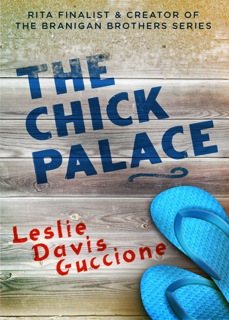
Fine tuned my imagination and tried to have much of whatever scene I was going to tackle already in my head. <–took practice but getting the opening in my head first keeps me on track.
Do you outline?
In the days of selling romances via three chapters and synopsis, I’d expand the synopsis to a rough outline, but that often meant I’d outline the immediate chapters ahead of me/go back and flesh it out. Outline the next chapters, etc. (I can’t believe I’m admitting this.) And I used nothing more sophisticated than paper and pencil so I’d have that to look simultaneously.
For my current work I do some of the same but the notebook/pencil is to give my hands a break. I also keep a three ring binder. Since I freelance edit and mentor as many as 7/10 students I need the physical break from the constant pounding on the keyboard and staring at the screen. No carpal tunnel but tendonitis flares up. (and I’m faithful about finger and hand stretching)
All this is done in good old Microsoft Word, btw, but I’ve JUST won a Scrivener package so we’ll see how that goes.
What other things do you do to prepare? Stock up on food, unplug from Internet, get into a special mind-set, etc.
Sad to admit it was more like the opening to Romancing the Stone: no food, no kleenex, no toilet paper. Wrote like a maniac the minute the school bus left.
Do you go away or do you write at home?
Home but in every house, I’ve always had a dedicated office. (for taxes and had to have a space with a door that shut.)
How do these sessions make you feel? Exhilarated? Tired? Satisfied? Frustrated?
<– Every one and often irritated when words finally worked but the clock ran out.
Do you complete a draft of an entire novel during this period?
Yes, plowing forward to get anything at all down. Revision is so much easier when there’s something to work against.
What’s your process for editing your draft?
Post-it notes and using colored fonts within the manuscript to identify places I want to get back to.
Anything else you’d like to say about binge writing?
If you wait for your muse you’ll never get a thing finished. Plus this career is based on deadlines and contracts from selling three chapters and an outline. I’ve never had the luxury of writing a full novel then placing it, rather, I placed the partial and then had to write it.
Would you like to give us a short bio, URL, novels available?
I’ve written 31 novels since 1986. Romance, romantic suspense; Hear No Evil series for Scholastic as Kate Chester. Tell Me How the Wind Sounds, and Come Morning – multiple awards for Kidlit.
I took a ten year break to teach and Dec 26th my agent placed The Chick Palace with B&N “nook first” it hit #1 and stayed in the top 10 for 2 weeks and stayed a bestseller for 4 weeks including “staff choice”. Now it’s also on Amazon.
You can learn more about Leslie at http://lesliedavisguccione.blogspot.com/
I’ve lately become fascinated with the idea of binge writing. Hole up for three days, write like a maniac and come up with the draft of a novel. Why not? I’m going to be giving a workshop in binge writing at the Seton Hill University “In Your Write Mind” writing conference June 21-24, 2012. While I was doing research for my class, my friend, Lynne Hansen, suggested that I contact Emily Asad who has been making a practice of binge writing for several years. I sent her some interview questions, and she gave me answers that were better than anything I’d hoped for. Here is Emily’s interview:
What do you write?
I write for young adults, mostly between the ages of 13-18. I’ve had to learn to become an intensive writer because of my husband, whose big line is “But I married you so I could spend time with you…” How do you fight that? Being an author is a lonely and solitary business, when it comes down to it, so I suppose it’s a bit of betrayal in a way. In order to minimize his pain, I’ve learned to knock out entire novels in about two to three weeks, at a word count somewhere between 45-60,000 words. I simmer throughout the year, and then I purge when I get a solid chunk of free time.
Why does having an intensive writing period work for you? How did you become a binge writer?
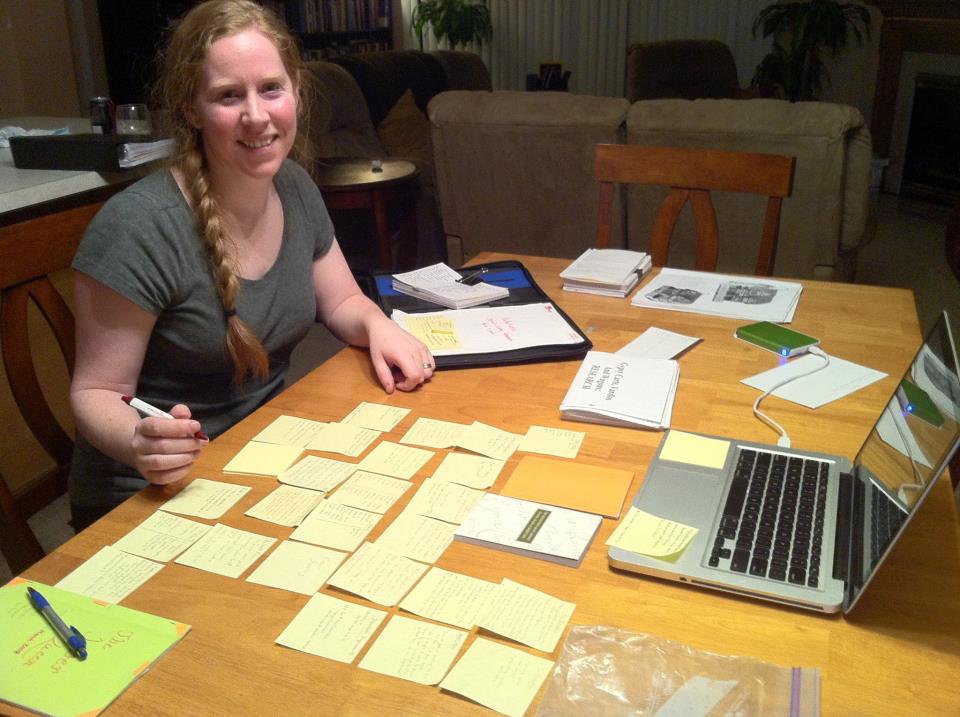
I’m a high school English teacher, so having summers off really works well for me. Stephen King says a good writer should a thousand words every day, but I doubt my hubby would let me have that time! Nor would my 18-month old daughter, or my 8-year-old daughter, who need my attention almost every minute of the day until they go to bed. However, I do have five minutes to myself throughout the day. While that is not enough to sustain a mood or put together an entire scene, it is enough to jot down my thoughts on some sticky notes. In fact, I’ve developed a pretty simple system over the years. Though it seems elaborate at first, it’s really logical.
What do you do, writing-wise-to prepare for your binge writing sessions? Do you have an already prepared outline?
My system involves about 30 4×6 notecards, several pads of small and medium sticky notes, and a large gem clip. I carry the sticky notes with me wherever I go (napkins get wet at restaurants and receipts get lost). For Phase One, I take notes. Whenever I think of something I want in my novel – dialogue, something to research, a personality trait – I write it on my sticky note. All the sticky notes go on one notecard; I’ll sort them out later when I get a chance. I don’t censor anything and I don’t change anything until I get to Phase Two. That’s when I take a look at all the sticky notes I’ve collected over the year (or sometimes it’s just a few months, since I might have Thanksgiving or Christmas or Spring Break). I set them out in neat little rows and columns on a flat surface (the kitchen table works well, though I usually only get a few hours before someone else needs to use it… the kids insist on being fed every few hours, you know…). After I’ve had a look at all the notes I’ve collected, I try to put them into some sort of order. I cluster them by theme or effect, and I put each cluster on notecards. If I don’t like where a scene ends up, I can remove it and put it on another notecard. This way, none of my ideas get lost, and I can move them around as needed.
What other things do you do to prepare? Stock up on food, unplug from Internet, get into a special mind-set, etc.?
Sometimes the organizing part takes a few hours, or sometimes it takes days. I don’t worry about the little details; as long as I have enough ideas to get my characters from one point to the next, I can come up with the fillers as I type. I can also move entire notecard-chapters around as needed. It’s such freedom from the old notebooks I used to use, where I’d have to tear out the pages or re-write my notes onto a new location. I adore my sticky note method!
Phase Three is the writing part. This is where I put on the Cranky Face and use the Vicious Voice; if I don’t, my family would never leave me alone. I mean, if the girls walk in on me while I’m in the bathroom, think about how they can ruin the mood when I’m deep in thought! So I make it very clear to them that I need some time to myself. I’ve often considered checking into a hotel or living at Starbucks, but I’ve never gone through with that plan. So I end up in my closet. We’re talking about the coat closet at the front of the house, the one that’s about four feet by six feet and smells like wet feet. I light a candle in there, or maybe put out some vanilla or coffee beans, and then I shove all the coats to one side so I can I haul my comfy office chair to the other. It’s claustrophobic, but it’s exactly what I need. I get to be alone with my thoughts. No distractions, not even a window. Just me, my laptop, and my notes. Then I’m ready to settle down to business.
Before I write each day, I eat a really good breakfast. In fact, I take better care of my body when I write than any other time of year. Writing is exhausting! Holding still is hard enough, and numb fingers are worse, but I get headaches from staring at the screen for too long or from thinking so hard. Breakfast usually includes whole wheat toast with honey or jelly, eggs, and 4 ounces of orange juice. I save the coffee for the afternoon when I start to falter. I hate mornings, so it’s good if I can start writing by 9:00. Any earlier, and I’m not really awake. Any later, though, and I waste my first and freshest energy. I treat myself to a 10 or 15-minute lunch of whatever I’m hungry for, do some stretching and walking around, and then go back to sit. I might even juggle some beanbags or clubs, just to get the blood pumping after all that sitting. Also, I read somewhere that creative brains require sugar. Whether it’s true or not, it’s a great excuse to snack on some Godiva Dark Chocolate pearls! On top of that, I keep string cheese, walnuts and apples nearby.
By the “end of the day,” meaning whenever I can’t focus anymore or whenever my family insists on my presence (whichever comes first), I’ve usually written 2 chapters of about 3,000 words each. I don’t stop until I’ve finished the chapter, though, or else I lose momentum.
The next day, I re-read what I wrote and see if it made sense. Not only does this give me a chance to recapture my momentum, but I can do some quick edits before I start on the next chapters.
Now, we all know that nobody knows the characters until they’re written, which is true, but by the time I get around to writing them down on paper after thinking about them all year, there aren’t usually too many surprises. Even so, there’s always something I didn’t calculate. I wouldn’t say I get “writer’s block,” but sometimes I have trouble connecting my scenes. If that happens, I’ll go clean something (a sink, the floor, maybe even do some laundry) so my family doesn’t think I’ve completely checked out on them. But I try not to talk to anyone because I can’t deal with their problems when I’m creating my own world filled with problems. I live in silence and self-imposed solitude while I’m writing.
Do you complete a draft of an entire novel during this period? What’s your process for editing your draft?
After about two or three weeks, I’m done with a full-length novel. It’s a rough draft, of course, but I’ll edit it throughout the year, mostly on weekends when my hubby’s watching soccer or when my daughters are taking naps. I like finishing them so quickly because it’s easier for me to stay consistent. I’ve found that when I take my time and stretch out the writing over months, every show I watch or book I read or article I research tends to affect my style, characters or plot, and then the beginning doesn’t quite match the end. When I crunch, everything matches. Even though the characters or situations may evolve or change direction when I put them down on actual paper, my preliminary research stays steady.
I’m getting faster every year. My first novel, The Jester of Corona, took me about a year to complete. My quickest, The Dollhouse Romance, took 13 days. My best one, Code Name: Whatever, took five months to write and ten years to edit; it was just released on Amazon.com in e-book and print. Of the twelve novels I’ve completed, however, I’d say I average between two and three weeks. Even so, binge writing sometimes has its down side. I get prideful that I can finish a novel so quickly, so when something takes longer, I feel frustrated or stupid. There’s always the question of “Can I write something in 12 days? 11? 10?” and it’s unnecessary pressure that I can’t shake. There’s always a little voice pushing me to write faster and better. I try to ignore it and focus on telling the best story I can, no matter how long it takes. My latest novel, as yet unpublished and still in the editing process, took 27 days spread over 5 months; I was only able to snag a few hours of writing time during that period of life, so I had to be patient. Still, it’s an immense relief when I finish the writing part! I feel tired, drained, and happy. But never finished. I suppose my novels will never truly be finished; there’s always something to edit, add, change, or rearrange, but I’m learning how to move on to the next project without looking back.
All in all, binge writing works for me. I’m not disciplined to get up early in the morning before the kids are awake, and my evening time is sacred for my hubby and me. So summer vacation or Spring Break are a natural option. If anyone wants to try binge writing, I’d tell them to be organized and know what they want to say, even if they don’t quite know how to say it. And don’t pressure yourself to get it done; just use your time wisely and stay motivated.
Best of luck to my fellow dreamers!
Emily Asad is the author of: The Jester of Corona, The Juggler’s Journey, Destination Paraguay, Survival in Style, and Code Name: Whatever. Visit her web page at www.emilyasad.com. Find her books at www.smashwords.com or www.amazon.com.
 I’m a definite werecat fan, so I was super-excited when I saw that ABC Family was making a werecat series. I rushed out to buy The Nine Lives of Chloe King, by Liz Braswell. As a writer, I was curious to see how the book compared to the series. The plot centers around a girl just turning sixteen who is noticing some strange things going on: preternatural strength and hearing, guys are suddenly uber-attracted to her, and some shadowy figure seems to be chasing her. When she falls off Coit Tower in San Francisco, she barely receives a scratch. Gradually, she finds out that she’s a member a race called Mai, descended from Egyptian Cat Goddess, Bastet.
The TV series plays down the sexuality of the character. Since Chloe is sixteen, this it to be expected to make it palatable to television audiences. In the book, she has a pretty steamy relationship with Alex, which goes as far as making out in the janitor’s closet. In the series, I was disappointed to find out that Alex turns out to be more of a protector than boyfriend.
Chloe’s mom is strangely unconcerned about her barely sixteen-year-old daughter going out to a club and meeting a guy. This was true for both book and series. Also, in the book, Chloe acts fairly bratty about her two best friends hooking up. In the first episode Chloe is a pretty good sport about the whole thing.
I was a little let down that Brian didn’t make his own kitty hat in the series. It was a nice touch in the book that he knit his own hat, but I understand that it made more sense for him to buy it from the quirky second-hand clothes shop where Chloe works.
The series identified the villain, her allies, and backstory about the Mai a lot faster. At the end of the first book, the reader didn’t have that info. As for special effects, her retractable claws looked a little fakey, but I realize this must be difficult to do.
So far, for the series, they tightened up motives and relationships a little more and made the series more PG. Wrapping the whole thing up into a neater package is what film and TV developers do, right? Even though it removes some of the quirks and makes it a little less interesting, it makes a more commercial package. I sometimes wish they’d leave more of the quirks in, though.
It will be interesting to see how the series progresses.
If you like werecats, take a look at my book, The Werecat Chronicles, available from Amazon and Barnes and Noble.
The Werecat Chronicles
Death Divided
Cellar Door: Words of Beauty, Tales of Terror
Monstrous Feminine: Dark Tales of Dangerous Woman
Hazard Yet Forward
Many Genres: One Craft
Small Bites
 Sally Bosco’s RSS feed
 Sally Bosco